Company
Aristocrat Interactive
Role
Lead UX Designer
Timeline
2022–present
Partners
UX, Product, Development, Legal
A small UX team was hard to see across the organization, had only two roles and no visible path to grow, and needed someone to keep it moving when its director was out.
Building the practice, not just the product
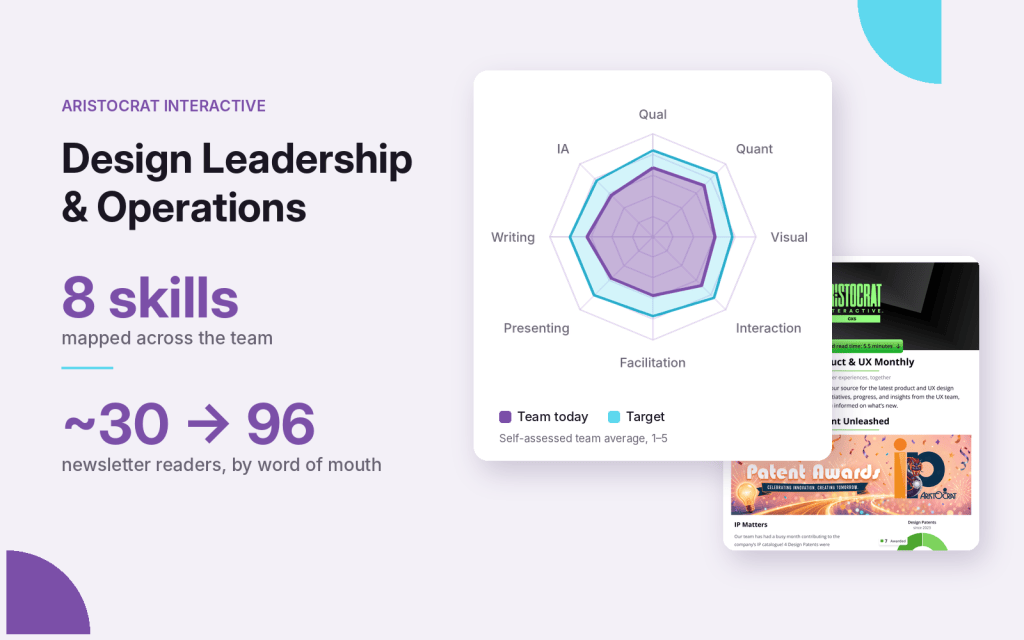
- Newsletter audience grew from about 30 to 96 through word of mouth
- 3+ years as the team’s UX point of contact during director absences
- NN/g-based skills assessment and a foundation for the team’s career framework
The problem
UX work at CXS was mostly invisible outside the people doing it. The team had only two roles, so designers couldn’t see a path to grow. And when our director was out, there was no formal backup to keep the team, its projects, and its escalations moving.
Making UX visible
I created the organization’s first Product & UX newsletter: a monthly, skimmable roundup of patents, research readouts, design initiatives, product releases, and the people behind them.
- Audience grew from about 30 to 96 people in six months, entirely through word of mouth and direct requests.
- 60+ unique viewers per edition. Readers spend 11–15 minutes, two to three times the estimated read time.
- Unique viewers rose 77% from the first edition to the second.
- It opened doors: more engagement with teams UX rarely worked with, more exposure to leadership, and conversations started by the content itself.
“They’re fun.” “Informative.” “I like the visuals better than some of the stuff we’re currently getting.”

Growing the team
Skills assessment
I built a skills assessment and rating guidelines based on NN/g’s UX competencies. It maps individual strengths and gaps across the team, and we use it three ways: matching people to projects, spotting team-wide gaps, and shaping each designer’s development around what they want to lean into.
A path to grow
When my director started, the team had only two roles and no visible career progression. I shared a roles and responsibilities guideline I’d built previously, and it became the foundation for the team’s current framework. I’ve since proposed an update that reshapes those roles for AI-assisted work, which is under review.
Mentoring
I mentor four designers and a researcher, and I’m one of only two people on the team who mentors others in research.
Keeping the team moving
For more than three years, I’ve been the team’s UX point of contact whenever our director is out. During the most recent two-week absence, I:
- Ran daily stand-ups and 1:1s with three designers, tracking progress, blockers, and support needs.
- Oversaw projects across cashless, cardless, and design-to-code work.
- Led design reviews, keeping feedback clear, actionable, and documented.
- Took escalations from Product and Development that would normally go to the director.
- Led a departing researcher’s offboarding and knowledge transfer: materials, ownership, key insights, and open risks.
- Worked with Legal on font usage, IP questions, and validating a new design convention, and traced a possible IP violation to confirm UX wasn’t responsible.
- Managed Figma administration, including access for new employees and Development.
- Sent weekly summaries of progress, risks, and decisions.
During another absence, when a recurring design review was missed, I rescheduled it myself so the team didn’t lose momentum.
Work under NDA; additional details provided only upon request.
