Company
Indiana Medical History Museum
Role
UX Design Consultant (solo)
Timeline
Jun 2016 – Jan 2021
Team
Solo, with the museum, the Indiana School for the Deaf and Sharp Eyed Group
Guided tours were the only way to see the museum, and finding ASL-speaking volunteers was nearly impossible.
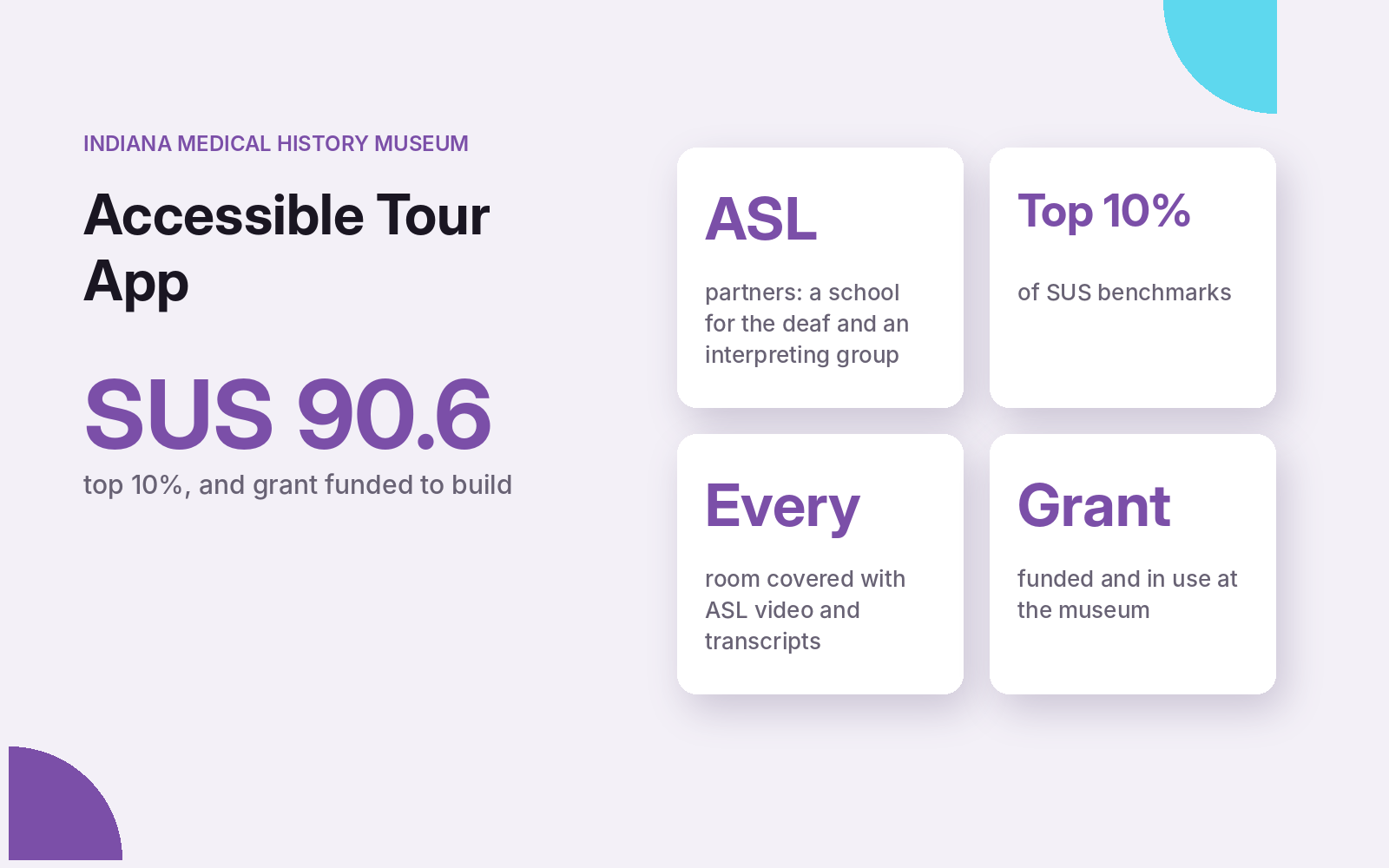
SUS 90.6 (top 10%)
- Average SUS of 90.6, in the top 10%
- Secured grant funding from Indiana Humanities
- App built and in use at the museum
The problem
The Indiana Medical History Museum is a small nonprofit that runs entirely on volunteer-led guided tours. Finding volunteers who sign ASL was very difficult, which shut out deaf and hard-of-hearing visitors.
Process
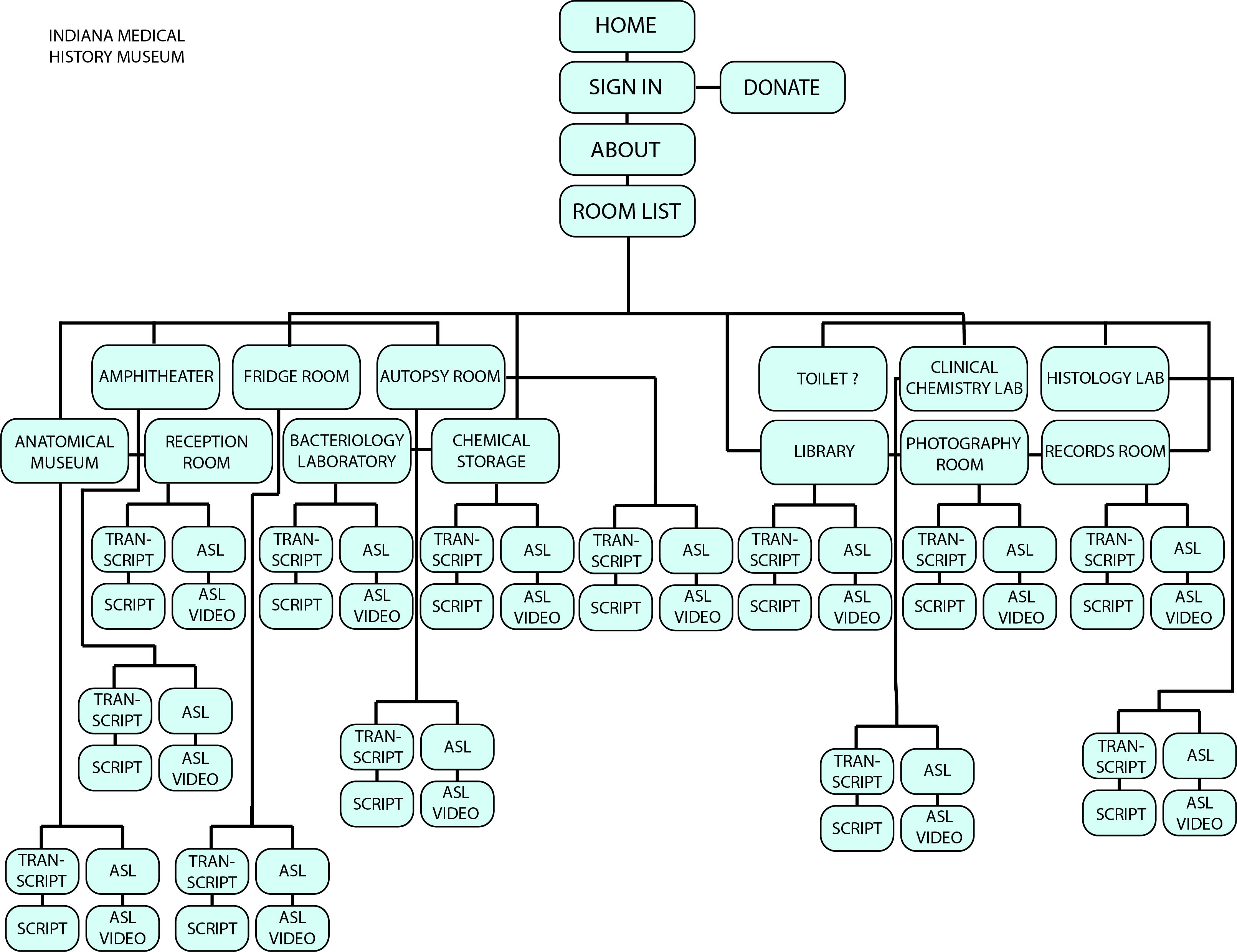
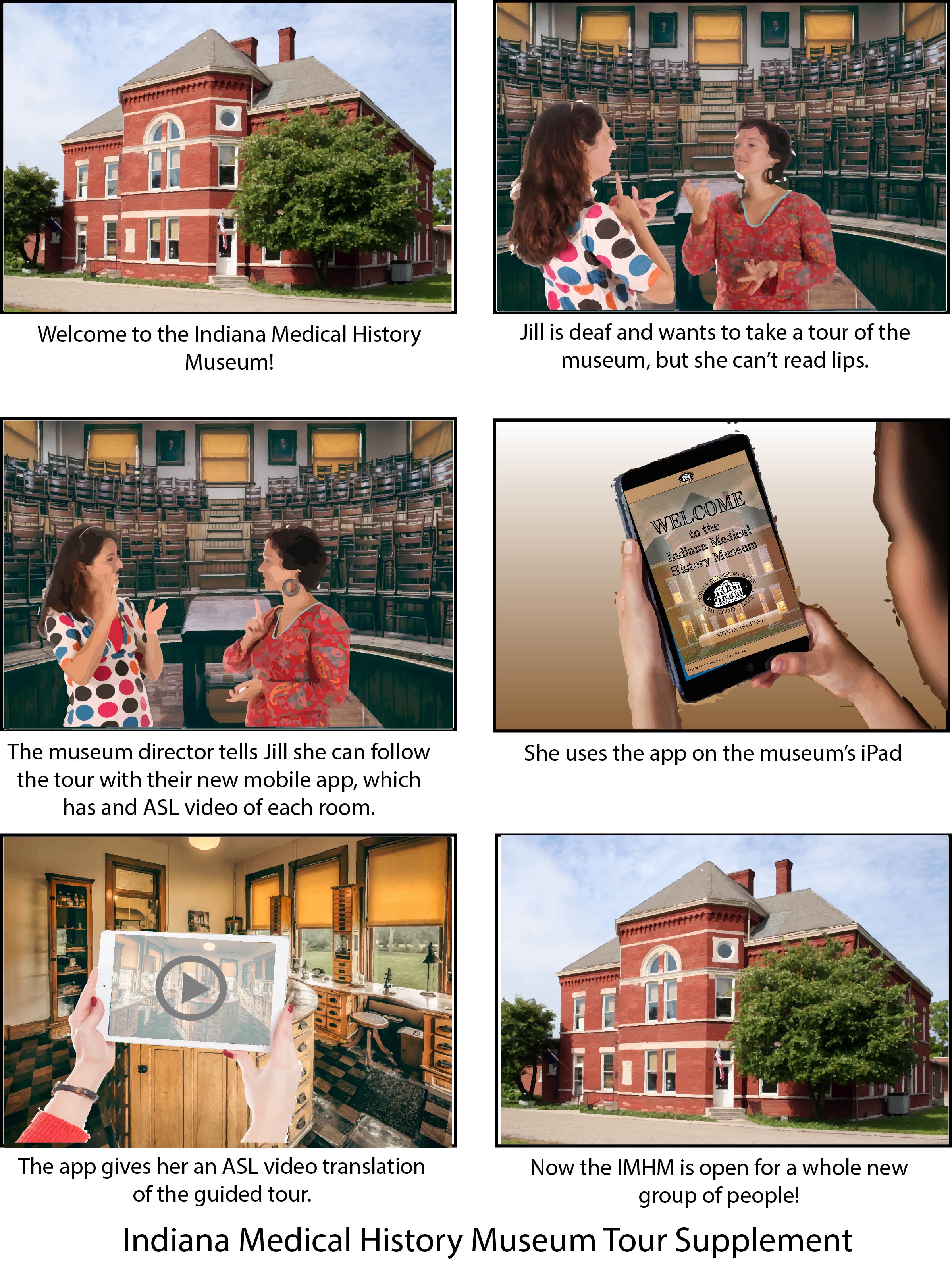
I interviewed the museum and people with hearing impairments, recorded and transcribed multiple tours to create one consistent script for written transcripts and ASL video, and built a room-by-room sitemap. Storyboards showed the app in context, followed by paper, physical and high-fidelity prototypes styled to match the museum’s brand.
Testing
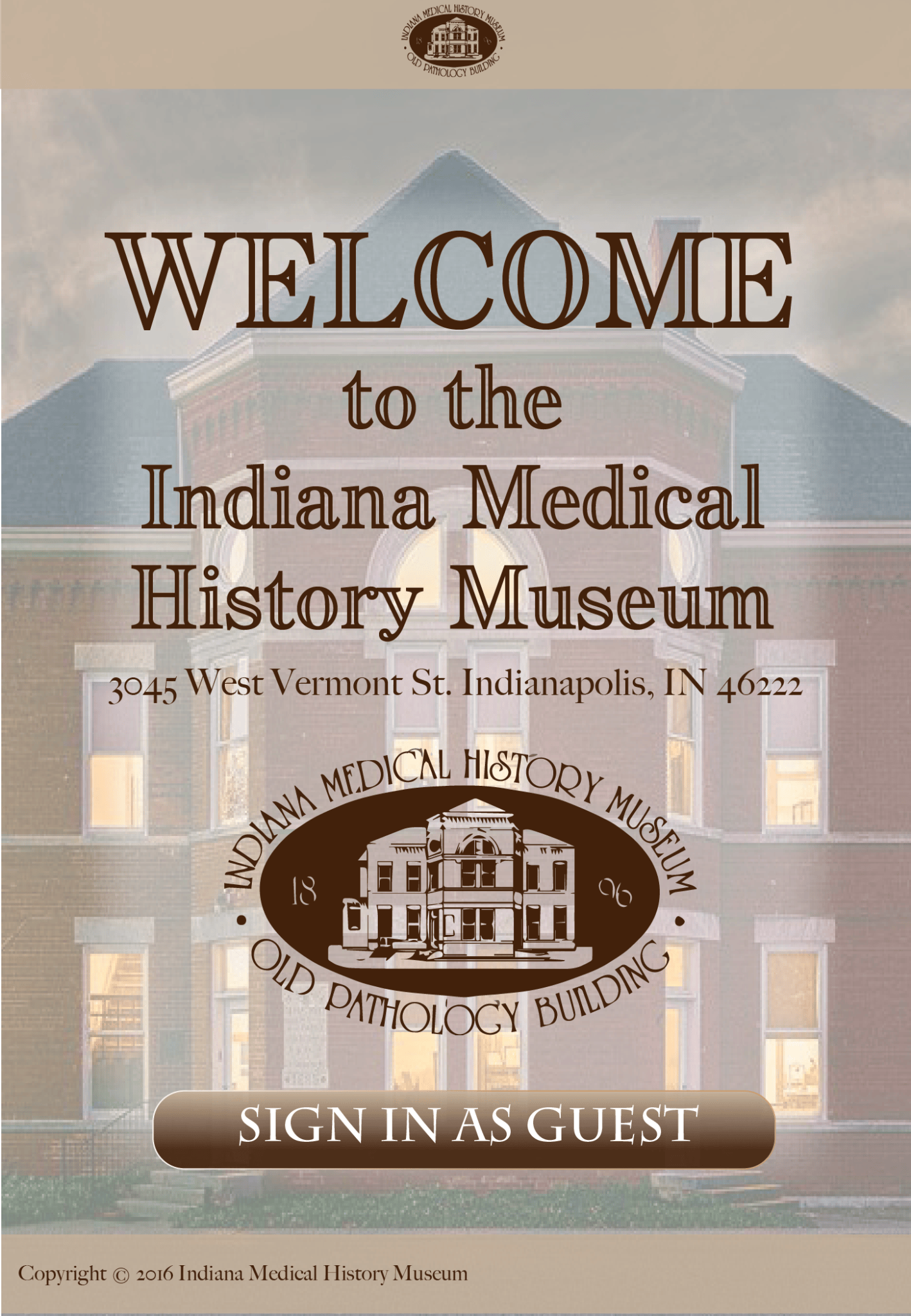
Three informal walkthroughs led to removing payment screens, improving landing page legibility and adding room photography. A round of testing with four participants produced an average SUS score of 90.6, in the top 10%. Further testing happened with end users in the museum.
Outcome
The research and prototype secured grant funding from Indiana Humanities to build the app, and it is now in use at the museum. The project also brought in the local deaf community, including the Indiana School for the Deaf and Sharp Eyed Group.

