Company
Aristocrat Interactive
Role
Lead UX Designer (research owner)
Timeline
[Add dates]
Team
[Add team]
Research findings weren’t measured the same way from study to study, so they were hard to compare and easy to dismiss.
Metrics in every study
- Benchmark framework scaled across the vertical
- Reusable tools and AI-assisted workflows
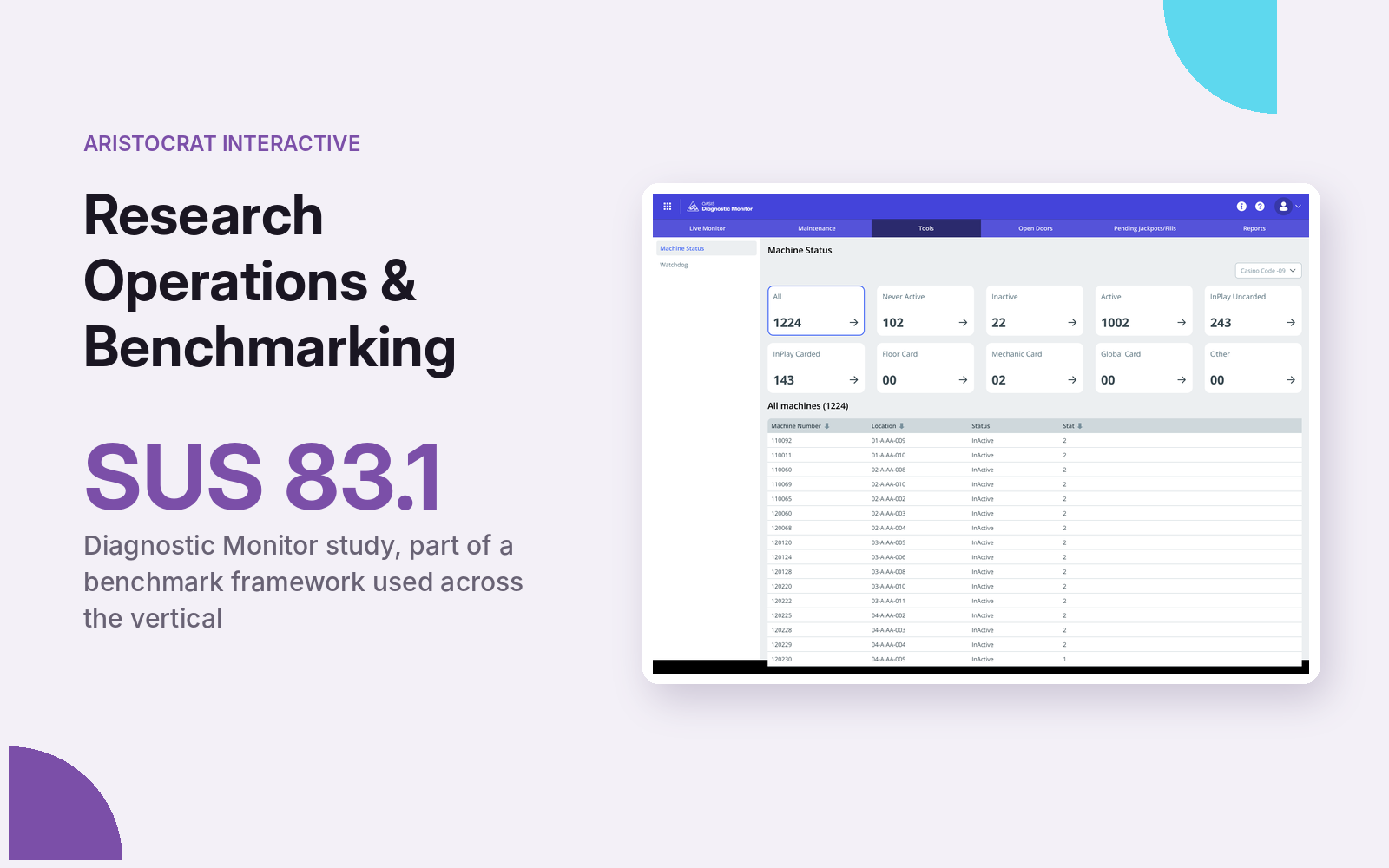
- Diagnostic Monitor: SUS 83.1 and a prioritized release-risk roadmap
The problem
When I took over research ownership, findings weren’t measured consistently from study to study. That made them hard to compare and easy for stakeholders to dismiss.
What I built
A benchmark testing framework that standardizes usability metrics across the business vertical: task success, single ease question, lostness, time on task, SUS and NPS. I operationalized it with reusable templates and AI-assisted workflows, including research-based casino operator and patron simulators for early concept evaluation.
In practice: Diagnostic Monitor
A moderated study of the redesigned Diagnostic Monitor: 4 participants, 6 task-based scenarios, 3 days.
- What worked: the redesigned status visibility gave users fast orientation. Average SUS was 83.1.
- Mental model gap: users think in operational events (lost credits, a voucher, a cash-out), not system modules like “Transactions.”
- Detail confidence: participants often completed tasks but weren’t sure they’d verified the right detail.
- Release risk: finding a lost mechanic card had the lowest success. Users didn’t connect it to “Tools” or “Sentinel Status.”
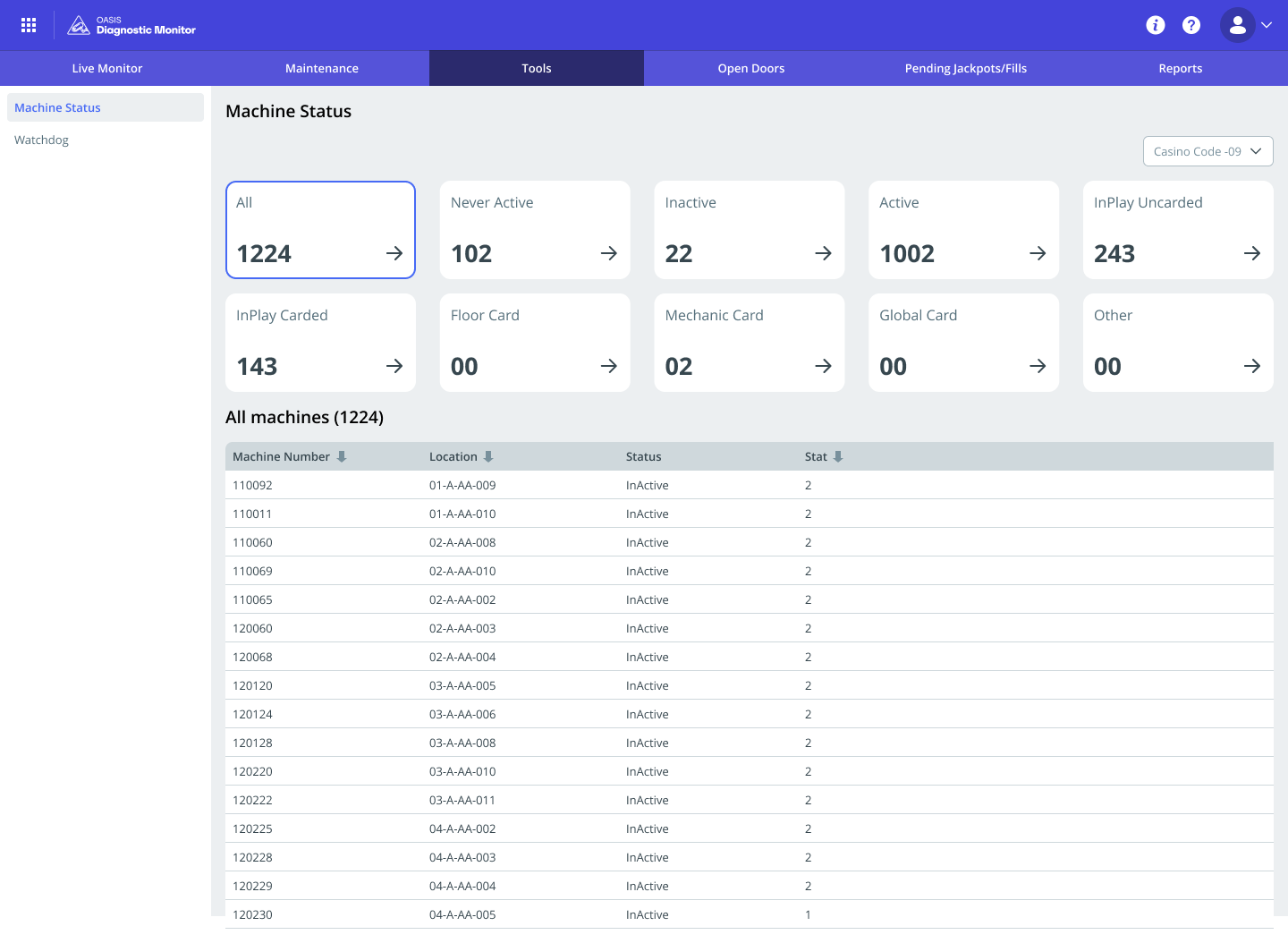
The metrics told a story the average alone would have hidden: strong overall usability masking one concentrated workflow risk. Every issue was rated by severity and confidence against Nielsen’s heuristics and turned into a roadmap that fixes confidence blockers first, then builds a connected investigation workflow. It became the UX research readout with the largest audience to date.
Outcome
- Metrics in every UX research study.
- Usability measured the same way across the vertical, so product decisions rest on comparable data.
Details under NDA. Happy to walk through the full project in an interview.

